
City Cast DC logo

A Brief History of Roosevelt Island

Posted on July 9, 2024   |   Updated on September 30, 2025
Kaela Cote-Stemmermann

Kaela Cote-Stemmermann

Union soldiers on the Mason's Island (Theodore Roosevelt Island) in 1861. Behind them is the Potomac Aqueduct Bridge and Georgetown University on top of the hill. (George N. Barnard/Wikimedia Commons)

Union soldiers on the Mason's Island (Theodore Roosevelt Island) in 1861. Behind them is the Potomac Aqueduct Bridge and Georgetown University on top of the hill. (George N. Barnard/Wikimedia Commons)

Theodore Roosevelt Island, a 88.5-acre nature preserve that’s only accessible by footbridge, has been home to indigenous peoples, plantation slaves, Civil War troops, and more. It only became the oasis we know today in the 1960s, when it was listed on the National Register of Historic Places.

Early Inhabitants

The Nacotchtank Indians are the earliest known inhabitants of the island. The tribe was forced there in the 1660s after John Smith and early settlers pushed them out of their home in Anacostia. But by the 1700s, the tribe merged with the Piscataways and other northern tribes, moving off the island.

Ruins of a Plantation

The island was then bought by the Mason family, who built a mansion and operated a cotton and corn plantation there. The mansion became the “center of Washington and Georgetown society,” and John Mason kept a perpetual open house. Presidents Washington, Jefferson, Madison, and Monroe all spent time there. The estate had 20-25 enslaved staff year-round who lived and worked on the grounds, doing everything from tending the fields and orchards to setting up lavish parties and events.
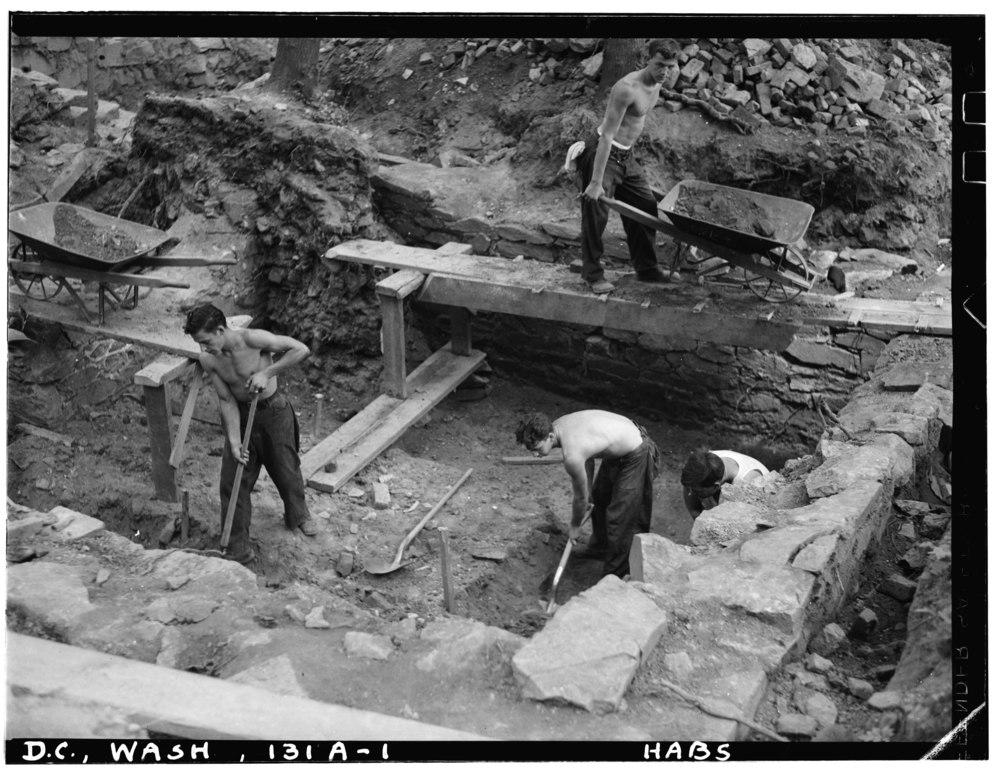
Excavating General John Mason’s House, Theodore Roosevelt Island, 1936.

Excavating General John Mason’s House, Theodore Roosevelt Island, 1936. (John O. Brostrup/Wikimedia Commons)

Home of the 1st U.S. Colored Infantry

The Civil War brought an end to the Mason Mansion and transformed the island into a U.S. Army training camp called Camp Greene where the First U.S. Colored Infantry trained. From 1864 to 1865, the island housed 1,200 Black soldiers. As the war dragged on, it also became a relief camp for self-emancipated Black families fleeing nearby Confederate territories.

Becoming Roosevelt Island

The Washington Post and Washington Times said leaders considered a contagious disease hospital and “a public pleasure ground” as options for the island. However, in 1931, the Roosevelt Memorial Association purchased the island and began the 30-year process of transforming it into the park we know today.


Share article

Hey DC

Get smart about D.C. with our news roundup and analysis.

Can't subscribe? Turn off your ad blocker and try again.

DC History

See All
DC HistoryApril 16

Get To Know the Architecture of DC Homes

D.C.’s neighborhoods are a patchwork of distinct architectural styles, each tied to a specific historical moment.

Logan Circle is known for its "gaslight era" Victorian homes. (Kimprobable/Getty Images)
DC HistoryMarch 30

The Rise & Fall of DC’s Iconic Wrestling Institution

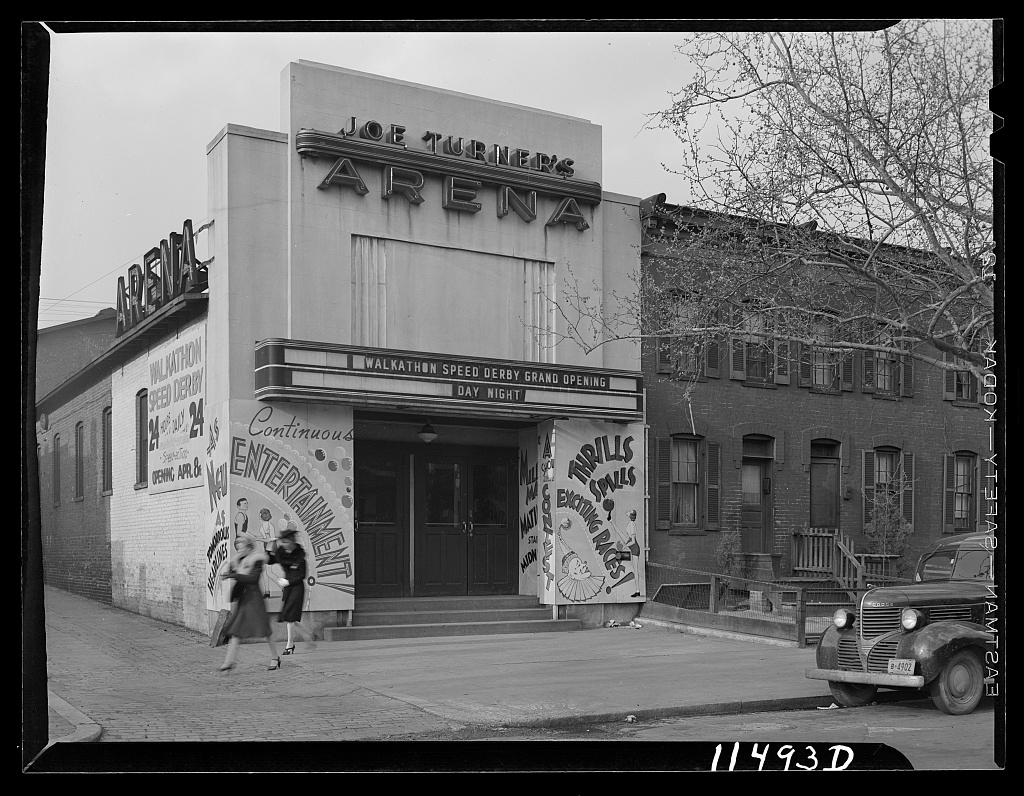
At the height of the Great Depression in 1935, a small-time D.C. wrestler named Joe Turner opened what would become the city’s most succe...

 Joe Turner's arena
DC HistoryFebruary 17

Washington DC’s First Chinese Restaurants

D.C.’s Chinatown is a bit lackluster in terms of authentic cuisine, but that wasn’t always the case. Restaurants were some of the first C...

Port Arthur restaurant, Washington D.C. The largest Chinese restaurant in the city in 1909, owned by early restaurateurs Ung Wah. (Streets of Washington/Flickr)
DC HistoryJanuary 27

How This Storm Compares To DC’s Largest

Sunday’s snowstorm in D.C. was remarkable, not only because of how much snow we got but because the combo of cold temps and sleet means i...

Horse-driven sleigh on a snowy path near the Lincoln Memorial (Bettmann/ Getty Images)
DC HistoryNovember 18, 2025

6 Spy Sites In Washington, DC That Changed History

This nondescript park in Foggy Bottom, close to the State Department, has seen its fair share of spy activity.

Peirce Barn 1972. (HABS Survey/NPS)
DC HistoryOctober 23, 2025

DC’s Secret Séance History

In Gilded Age Washington, D.C., séances and Ouija boards weren’t just parlor tricks — they were part of a craze that swept through societ...

An illustration from the 19th century of a spiritual séance. (clu/Getty Images)
DC HistorySeptember 23, 2025

From The Archive: How DC Became a Showcase of Brutalism

Love them or hate them, Brutalism has become a central part of D.C.’s iconography over the years. Here's why.

DC Metro ceiling. (Ralph Grunewald/Getty Images)
DC HistoryAugust 26, 2025

The Glen Echo Carousel that Became a Civil Rights Movement

Tucked away in Glen Echo Park is one of the world's most elaborate and historic carousels that played a surprising roll in the Civil Righ...

The Glen Echo Dentzel carousel gets a last minute touch up before the season's inaugural ride. (The Washington Post/Getty Images)