

On a May evening in 1986, David Helvey was hanging out in a parking lot in Maryland before a Judas Priest show, leaning on a car and having a beer with friends. When two young guys with a Sony Trinicon video camera approached him, the 20-year-old, wearing aviators and a muscle tee, said that he was “ready to rock!”
Little did he know that he would become part of a colorful cast of characters featured in the zany 1986 underground rock documentary, Heavy Metal Parking Lot. (He didn’t even discover the film until a friend showed it to him 17 years later.)
As Helvey walked into the film’s 40th anniversary screening this May, he still rocked a mullet. But instead of a beer, he held his artwork, lingering shame for his behavior on camera with a longtime family friend (he says he doesn't remember any of it and suspects they might have been egged on for the camera), and a matured appreciation for the good memories life can make. Helvey says he’s still baffled by the documentary’s cult status, but grateful for the community that’s come of it.
“Creating good memories are what we're going for,” said Helvey, now 60, who came in from Ocean City.
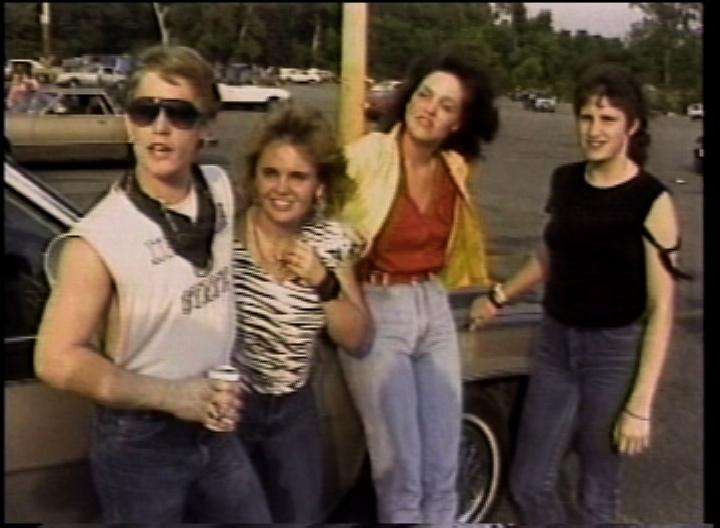
David Helvey, left, in the documentary Heavy Metal Parking Lot. (Courtesy of filmmakers)
Heavy Metal Parking Lot is a mere 16 minutes and 41 seconds. But in it, local filmmakers Jeff Krulik and John Heyn pack in a whole lot of 1980s heavy metal fandom, drug- and beer-infused antics from young shirtless men, women with moussed-up hair, tight-fitting animal print of varying sorts, classic 1980s cars, band shirts, beer, and more beer – all in the parking lot of the Capital Centre in Landover, Maryland before the English metal band Judas Priest and L.A. opener Dokken took center stage.
Despite first being released with little fanfare, the low-budget documentary eventually became an underground classic. Acclaimed Baltimore filmmaker John Waters once wrote that it gave him the creeps. Actor Edward Norton, who grew up in Columbia, Md., called it “anthropological genius.”
Forty years to the day since metalheads partied in that parking lot, film fans of all ages, along with those who were curious yet unfamiliar, packed the AFI Silver Theatre and Cultural Center in Silver Spring for a sold-out screening and mini film reunion. The collective laughs, claps, and occasional gasps give a glimpse into the unique ways the film has aged and its enduring, special meaning in the region.
“We really captured lightning in a bottle,” said Heyn, 68.
A relatable ‘time capsule’
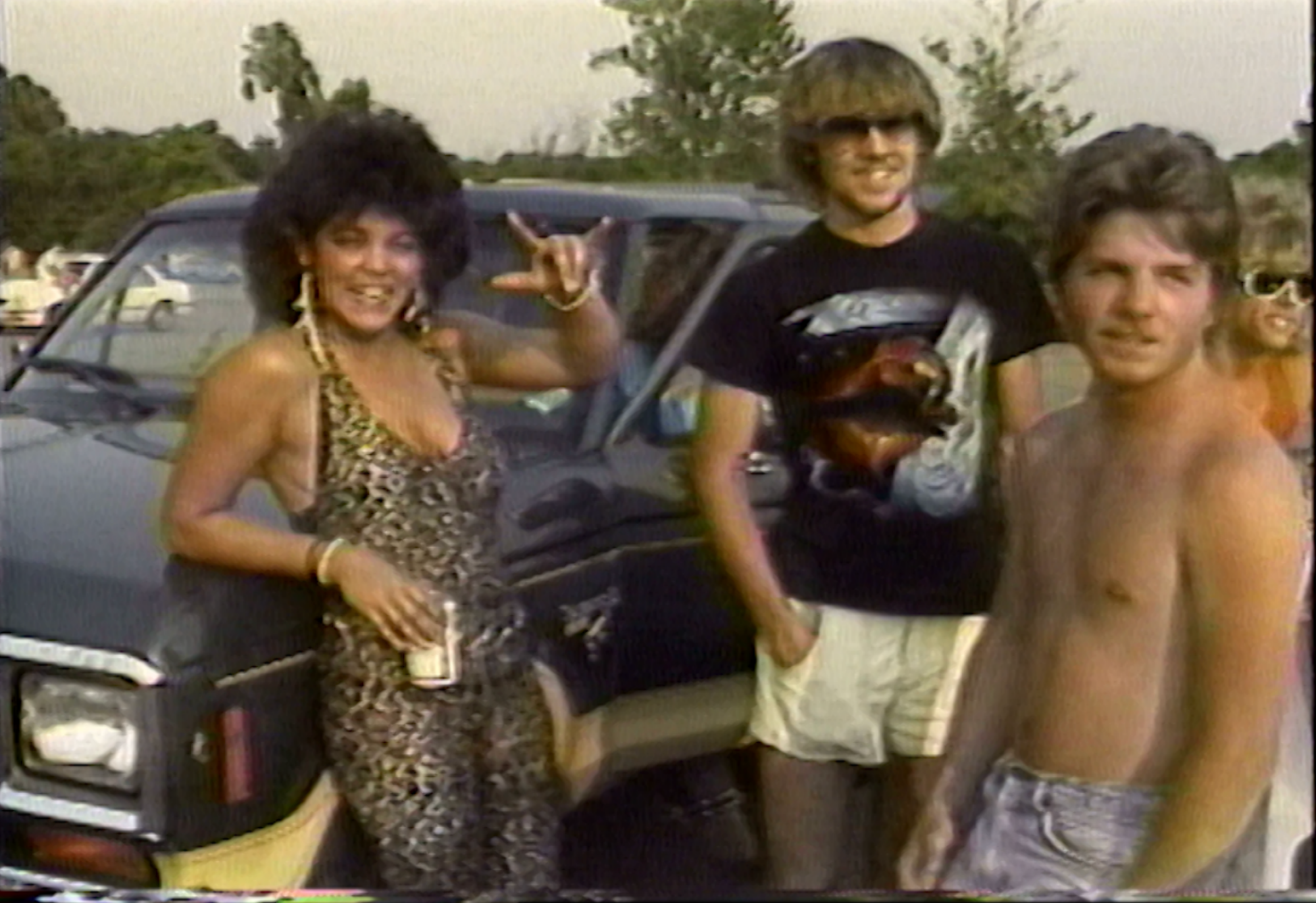
Stills from Heavy Metal Parking Lot. (Courtesy of filmmakers)
Ryan Walker, 46, came to the screening with his bandmate. He recognized Helvey and walked up to introduce himself.
He told City Cast DC he first learned about Heavy Metal Parking Lot in the ‘90s, before the internet and going viral was a thing. He’d heard that Nirvana played it on their tour bus. So when he spotted the DVD at a used record store, he picked it up. He and his friends, who play music, found it funny and got really into it.
“We'd quote the lines to each other all the time,” he said.
Judy Grannas, 60, came for the nostalgia. She spent her twenties going to concerts at the Capital Centre. The indoor arena held a lot of big shows and was home to the Washington Bullets and the Washington Capitals before being demolished in 2002 and turned into a hospital complex.
“It’s a time capsule for what it was like for kids like us to go to live events, to see a band,” said Grannas.
For 29-year-old Megan Rouch, who hadn’t heard of the Capital Centre or the documentary before Sunday’s screening, the film still resonated — a relatable snapshot, she said, of youthful antics and fandom of any era (even though she calls herself more of a punk and pop head).
“I think it’s endearing how cringy it is because everyone is cringy at that age," she said.
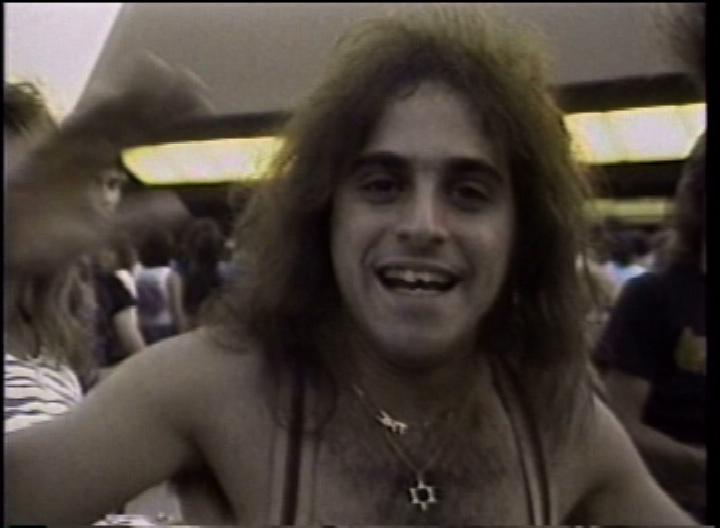
Z.Z. Ludwick, of Silver Spring, Md., in Heavy Metal Parking Lot. He says his image has appeared all over, from a mural in Nashville to telephone poles and even in Penthouse magazine. (Courtesy of filmmakers)
Z.Z. Ludwick – the once wacky, intoxicated, shirtless guy in suspenders who fanboyed about Judas Priest’s bass player toward the end of the film – took in the screening by himself, sitting in the front row. He told City Cast DC that for him, the evening was about remembering his best friend who passed away, whose youthful spirit is also captured in the film.
Now more of a bluegrass guy, Ludwick, 62, has been off drugs and alcohol for years and runs a local violin shop and barbecue business.
“ It's a blessing to grow older, but there's something about reliving your past, even if it kind of has negative connotations,” said Ludwick. “It just makes you feel young again.”
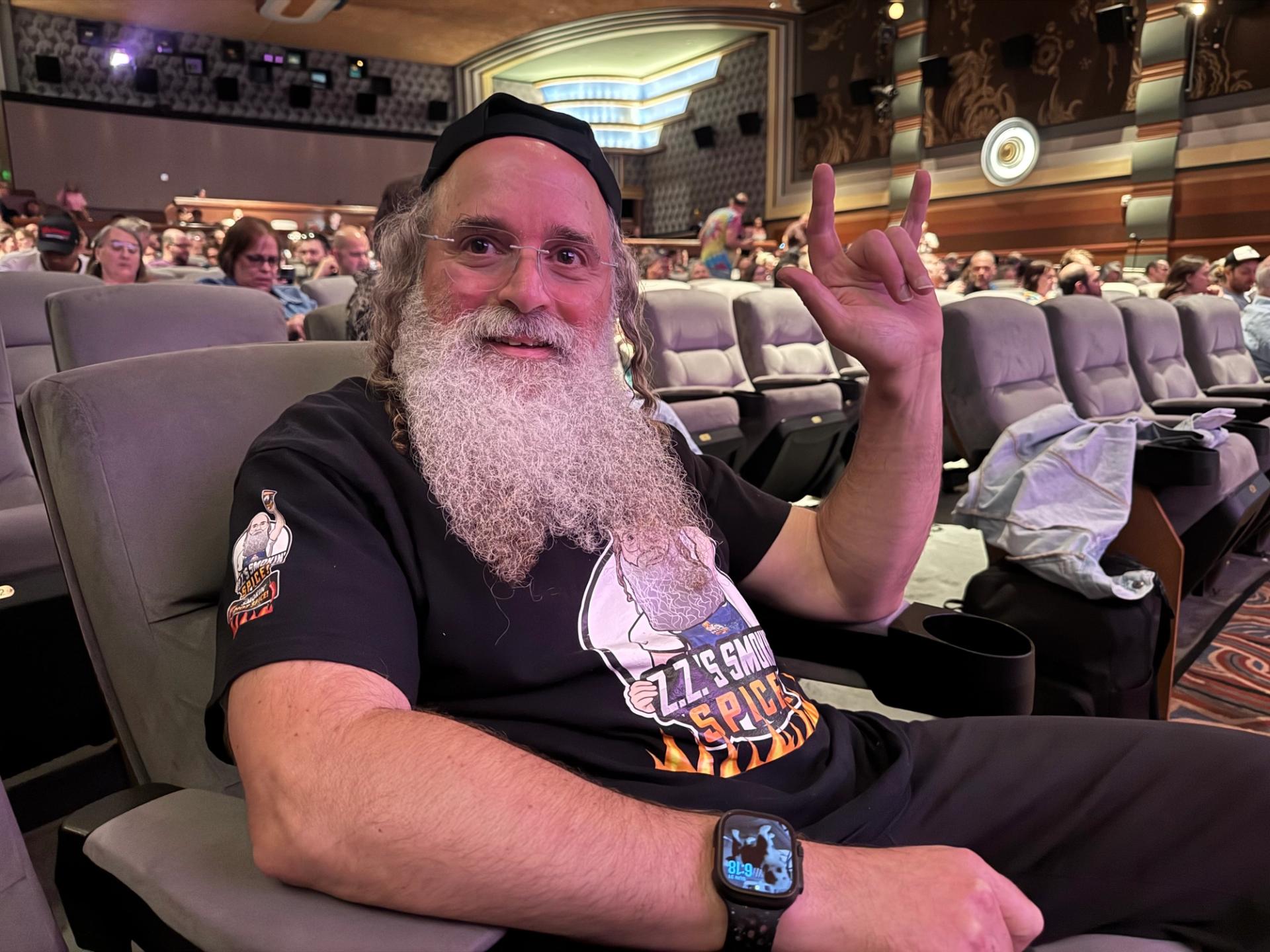
Z.Z. Ludwick sits up front for the 40th anniversary screening. He wants you to know in the film, he misdescribes himself as a “former bass player” when he was in fact an active heavy metal bass player. (Photo by Elana Gordon)
Created by chance
Heavy Metal Parking Lot came about by pure chance, Krulik and Heyn said. Krulik, 25 at the time, worked at a local cable station and had unique access to a VHS recorder and microphone.
The aspiring filmmakers had never been to a heavy metal concert before, let alone gone out tailgating. But the idea came to Heyn, then 28, “on a whim.” So off they went without prepared questions in mind, admittedly intimidated to step out of their car. As they started talking to people, they realized they’d struck gold.
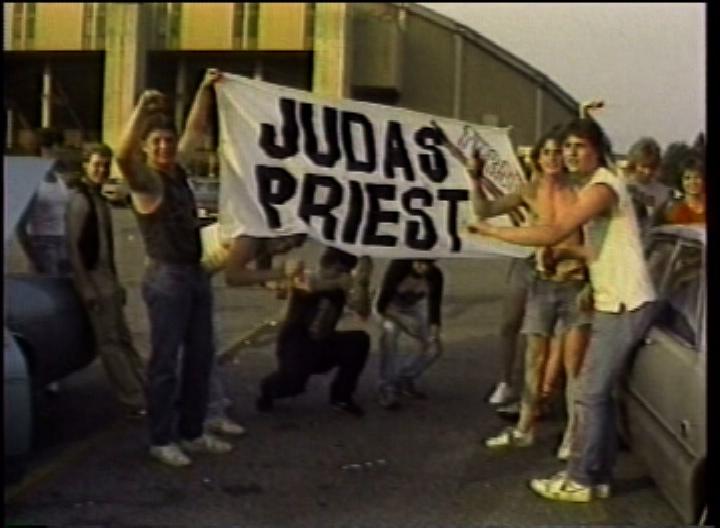
Filmmaker John Heyn brought out a similar banner for the 40th anniversary screening. (Still courtesy of filmmakers)
The two premiered the film later that fall at d.c. space, an alternative art and music venue. After a few months, they assumed the project had run its course. But the tape began circulating through informal sharing and trading, then made its way to a legendary West Coast rental spot, Mondo Video Store, and eventually into the hands of celebrities and musicians.
Heyn only realized something was up years later, in 1994, when he said filmmaker Sofia Coppola called him out of the blue to ask if she could license some of the material for a Comedy Central pilot (why yes of course, he responded).
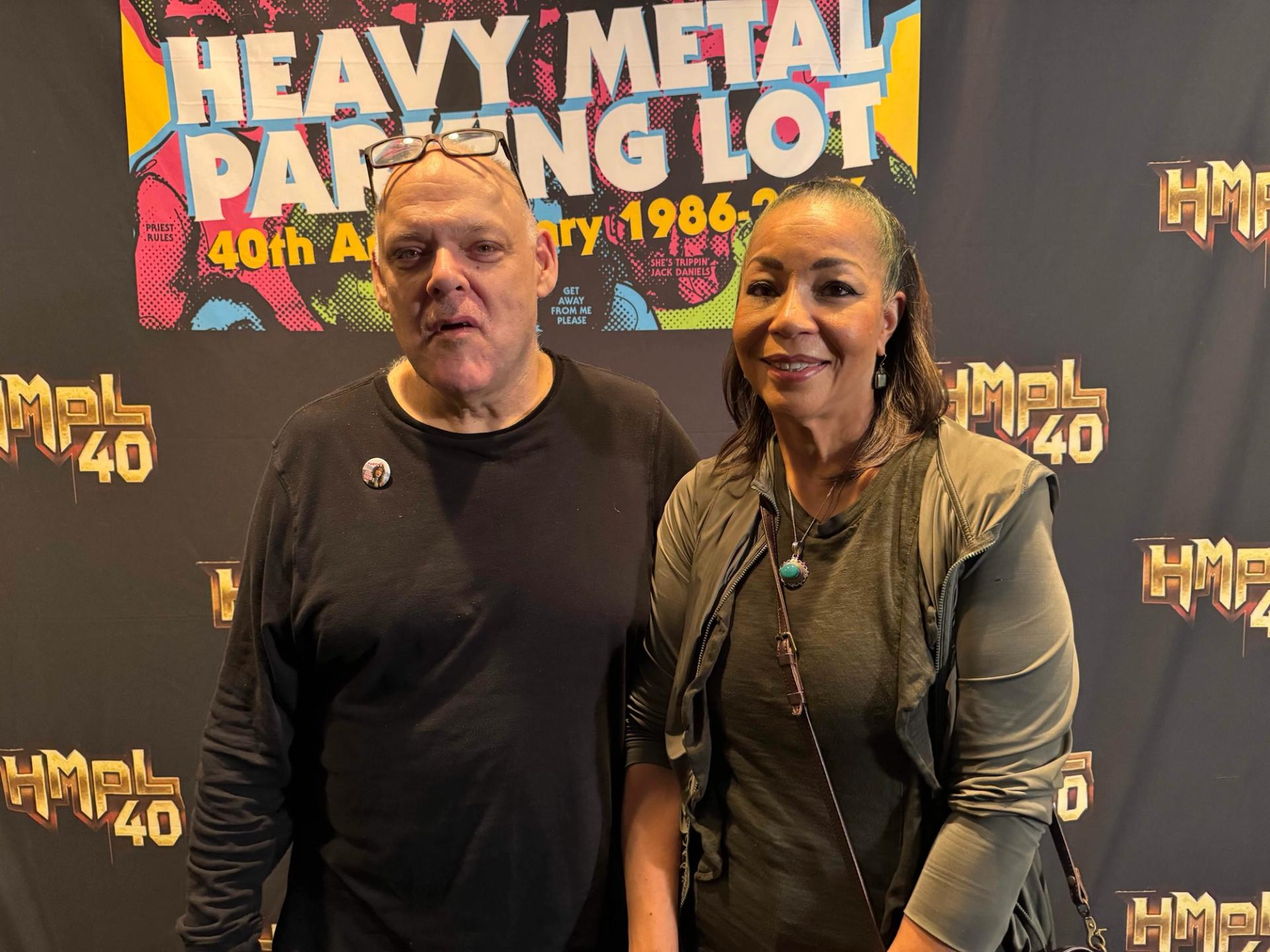
Jim and Sonia Venuto, longtime Prince George's County residents, were on their first date during the documentary. They returned for memories and new fans at the 40th anniversary screening.
For those who’ve never heard of the documentary, you're not alone. It’s still pretty niche and mostly known among rock documentary aficionados. (The millennial reporter writing this very dispatch had not heard of the doc until moving to D.C. a few years ago.) As the years pass, the filmmakers also admit that some of the behaviors and attitudes may not have aged well.
But its cultural and regional value has only grown over time, according to Laura Schnitker, an ethnomusicologist and lecturer at the University of Maryland who previously co-curated a local exhibit about the film.
“The words that film critics might use today would be ‘raw’ and ‘unflinching,’ because it’s not mediated the same way that documentaries about music typically are, where you have the talking heads and carefully curated content,” Schnitker told me. “Back then, you didn’t see that kind of thing that often… It might be on someone’s personal video collection, but Jeff and John had the audacity to release it.”
Lasting legacy
In a video before the screening, Judas Priest lead singer Rob Halford sent a surprise message. He told fans to continue the film’s legacy, inviting everyone to raise their “horns and fists to the fans, the filmmakers, the era – and the enduring spirit of Heavy Metal Parking Lot. Still roaring. Still wild. Still metal. Oh, yeeaaaaah!”
(The room erupted in cheers.)
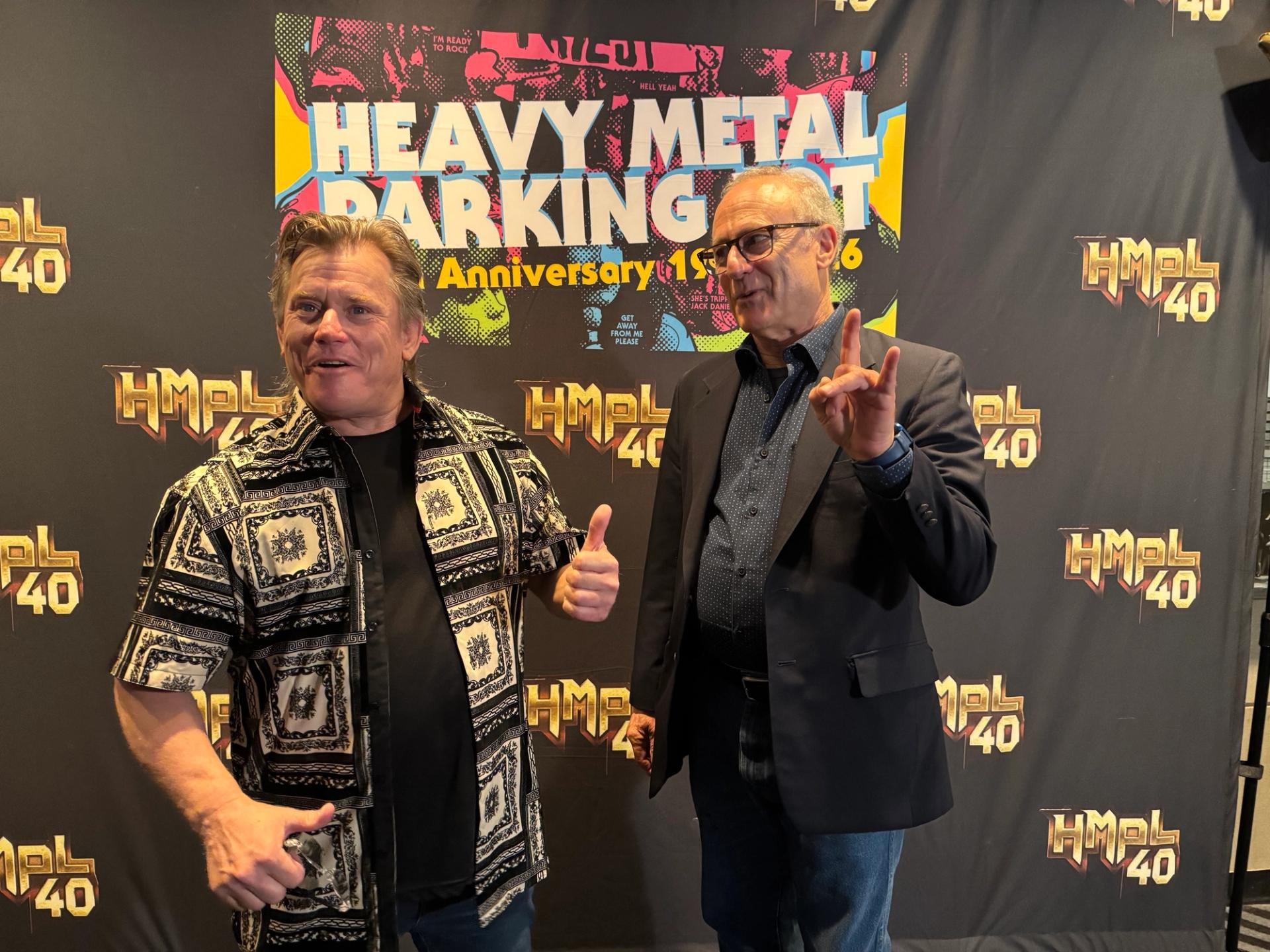
David Helvey and filmmaker John Heyn before the screening. (Elana Gordon)
Krulik has continued to explore other D.C.-based bands and music scenes, both the widely influential (We Are Fugazi From Washington, D.C.) and the lesser known (Razz (The) Documentary). And he says Heavy Metal Parking Lot isn’t going away any time soon. He and Heyn hope to continue documenting the stories behind the film and the people connected to it.
“I want to know more about the people and the stories we haven’t heard,” Krulik said.
As the final fans trickled out, Helvey finished signing posters and paused, pensive and grateful.
“You know what we did today?" he said. “We created a good memory.”
Elana Gordon is a multimedia journalist based in D.C.